


Defeat of a Man
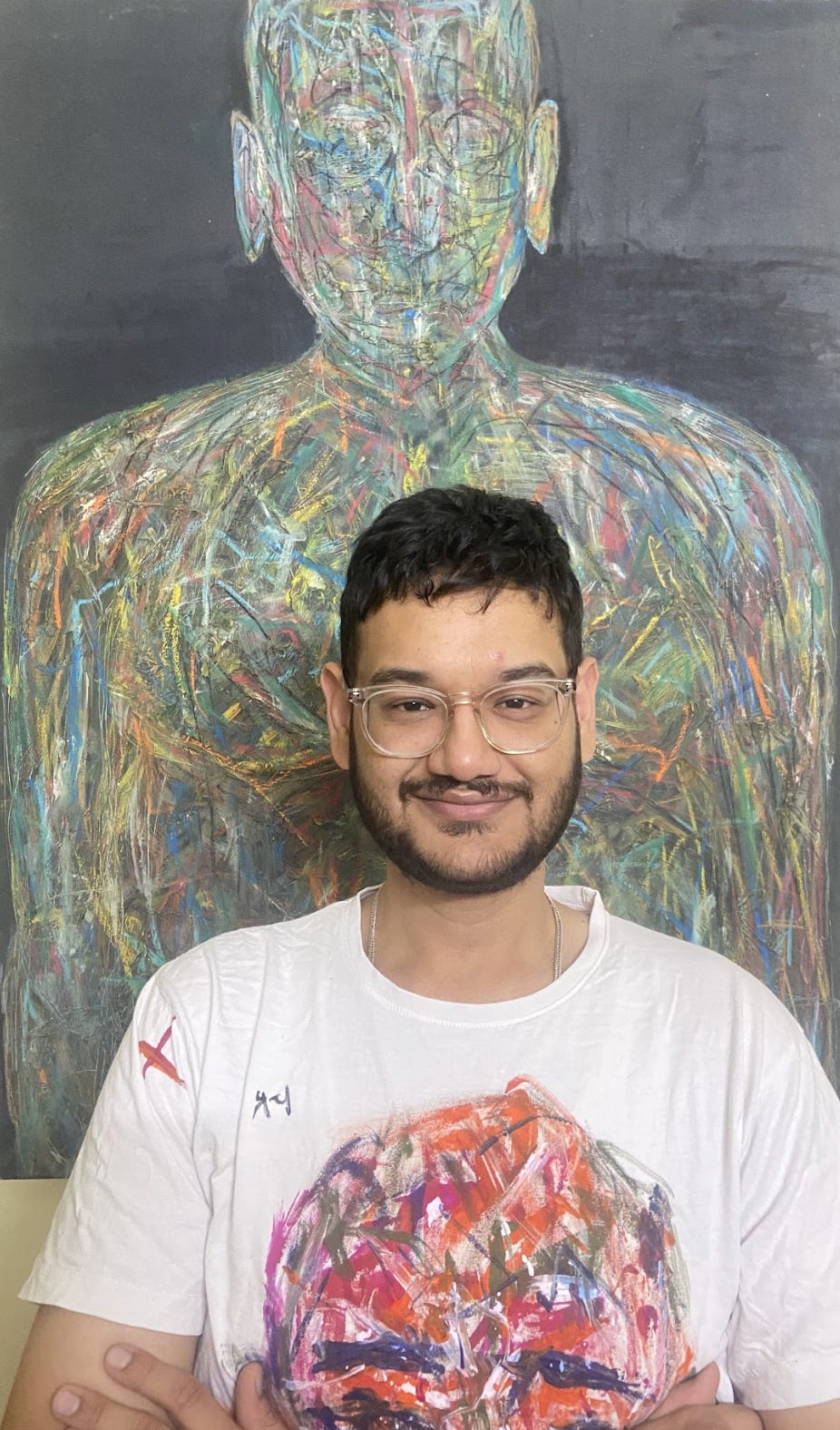
Born in Lucknow with roots in Uttarakhand, Pratulya’s life has been shaped by a restlessness both geographic and emotional. Leaving home at 17, early experiences of alienation and a profound sense of not belonging became the fertile, if difficult, terrain from which his art would grow. His practice is an ongoing attempt to make sense of complex emotional states, drawing not from visual recall but from emotional memory. This process manifests in two distinct styles: expressive, structured figures, often self-portraits, in oil and pastel, and spontaneous, chaotic pen drawings filled with surreal, expressive lines. It is from this deeply personal well that his powerful new series, Defeat of a Man, emerges as an honest portrayal of the moments that shape a person.
We sat down with Pratulya to unpack the journey of creating this body of work, the misconceptions he confronts, and the surprising lightness that follows such a heavy creative process.
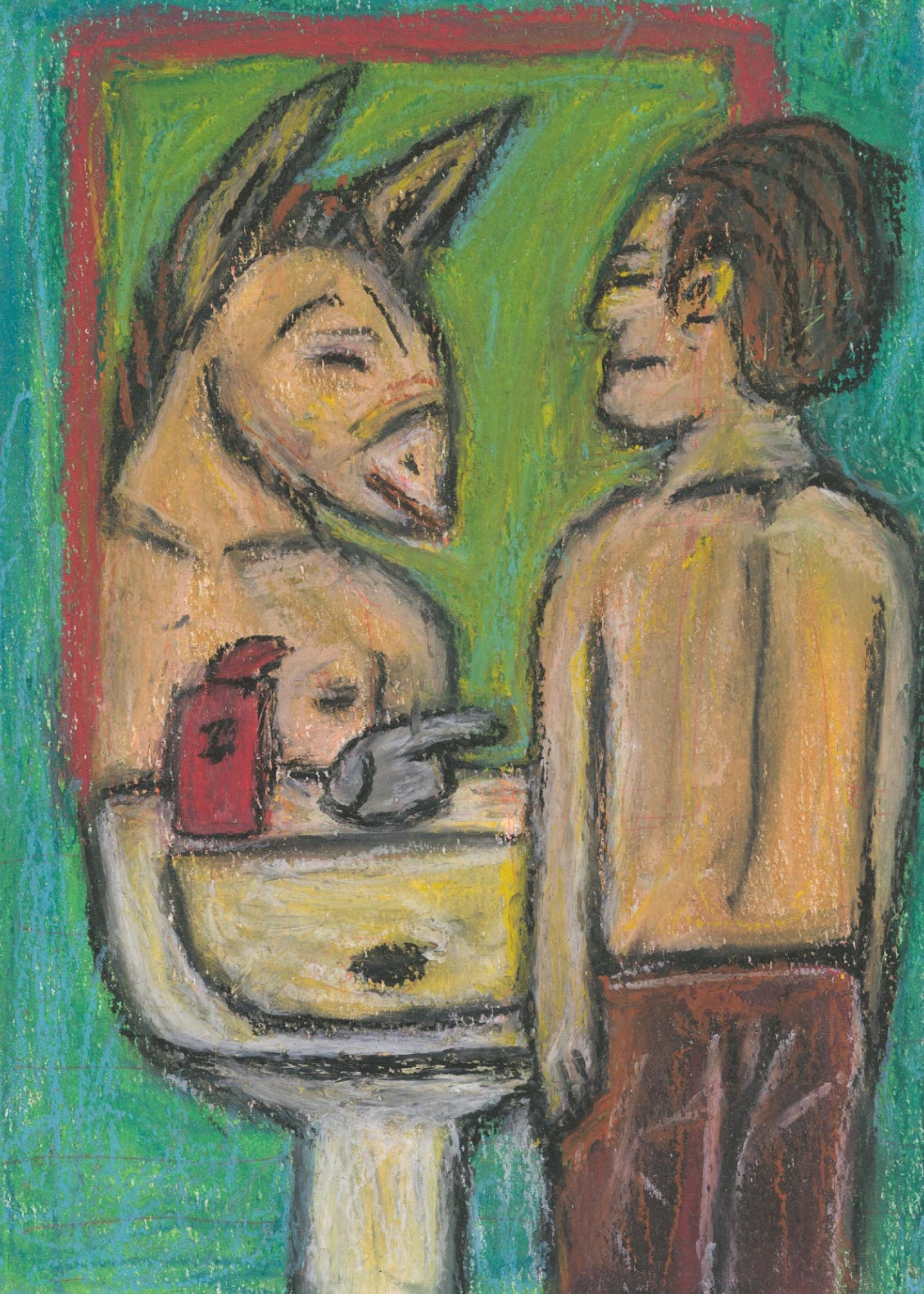
Image: Mirror, mirror on the wall, 2019, Oil pastels on paper. 5.8 x 8.3 in
Now that this body of work is complete and being shared with the world, what has it left you with, personally? Give us a picture of your headspace.
The process of making art feels like a purge. I like to think of it as throwing my emotions onto a physical substrate and communicating them into a form outside of myself. It is my way of letting it all out, and in doing so, discovering myself.
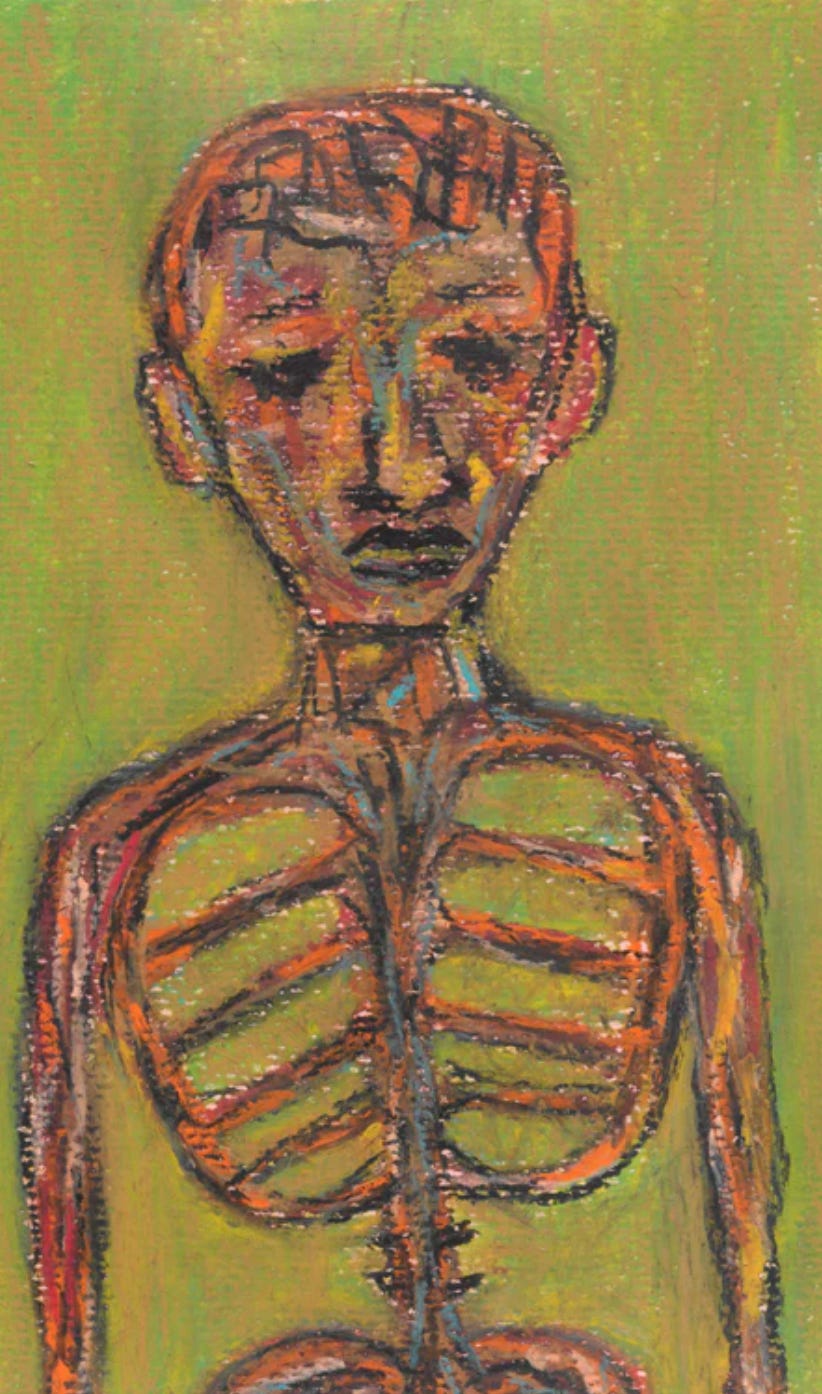
Image: Emptiness, 2020, Oil pastels on paper. 5.8 x 8.3 in
This series grapples with the pain of solitude and emptiness from your (predominantly masculine) lens. It exists within the current discourse around the “male loneliness epidemic,” a term often weaponized to remove accountability. How do you reconcile your art with this politicized context?
To call this a “masculine lens” would be an oversimplification that my art does not fit into. The themes I explore are universal. They are existential, rooted in a sense of hollowness, or the acceptance of it. This isn’t only about men; it affects women, too. It affects everyone right now. We are all lonelier.
What I’m exploring is the general human condition. I am the vessel for what I feel, something I came to terms with and hope others can relate to. I didn’t create this series to romanticize loneliness or to evoke sympathy. I created it for one primary reason: to communicate. To let it out. The second step was to act on it. This is my artistic exploration, but it doesn’t end here. A large part of my journey happens outside the artworks. It is about acceptance, followed by positive action. That’s how it works. Feeling bad doesn’t make the world better. Taking action makes things better for yourself and for others around you.
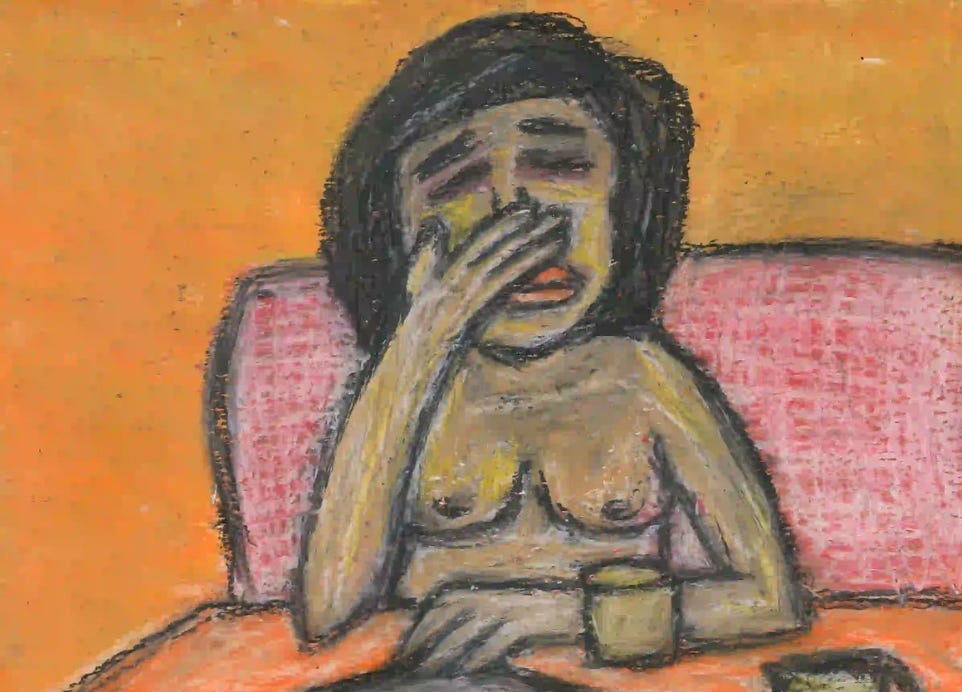
Image: Heavy air, 2020, Oil pastels on paper. 8.3 x 5.8 in
The series aims to deliver the viewer into a state of acceptance. Has creating this art helped you gain that acceptance?
Acceptance is not a soft word. It needs a ‘rhino’ skin. It’s harsh. The process has been about getting rid of shame, and yes, creating this art has been the crucial first step, the confrontation. It has forced me to stare directly at those difficult emotions, which is the only way to eventually move through them.
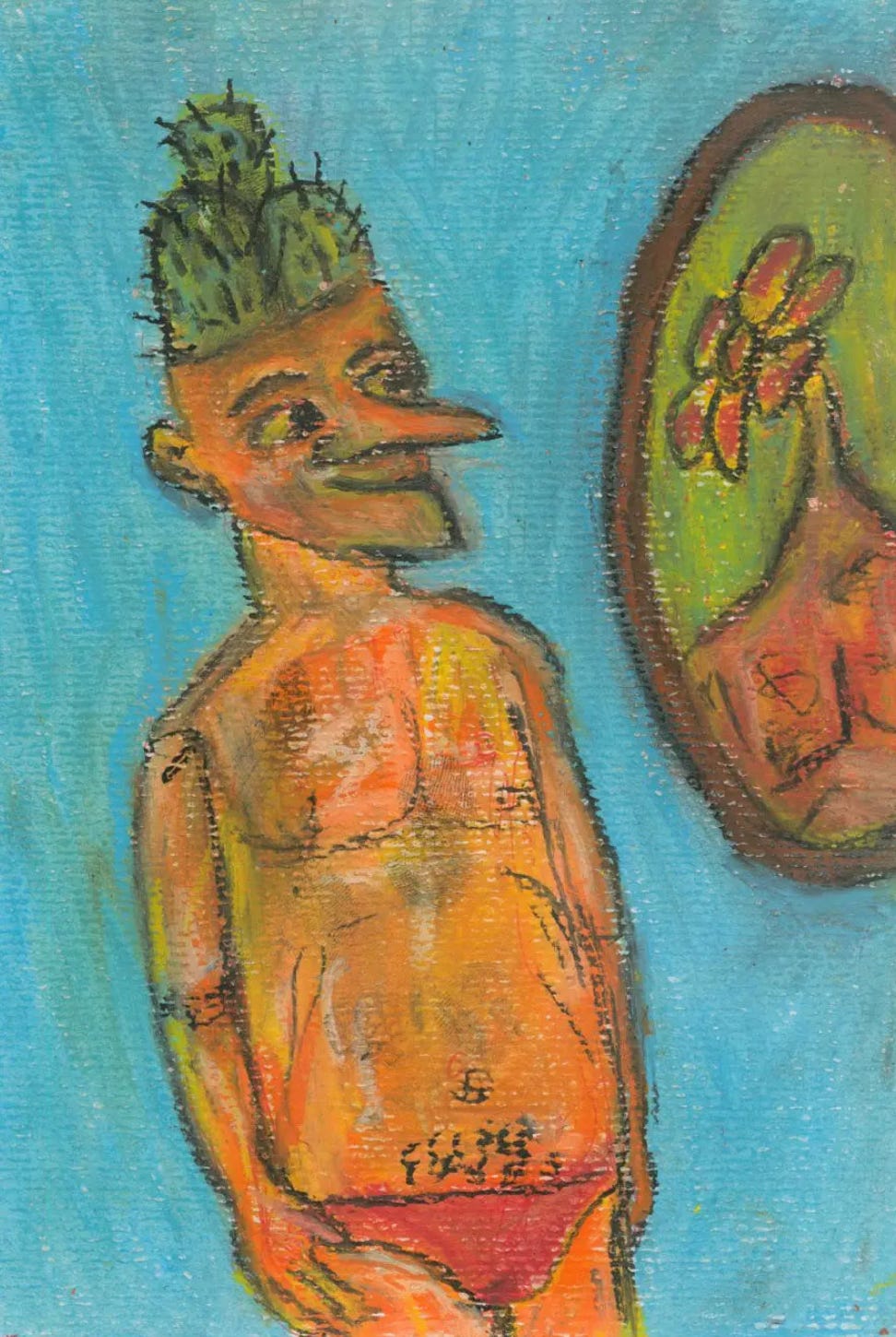
Image: Yours lovingly, 2022, Oil pastels on paper. 5.8 x 8.3 in
The work ‘Yours Lovingly’ is a beautiful, poignant representation of not just self-critique, but also an appetite for self-development. What is the feeling you hope the person acquiring this piece takes home with it?
I leave it open to interpretation. That piece, for me, holds a multitude of conflicting feelings. I’ve heard some people see “narcissism” in it, while others see “self-love,” and some see “delusion.” I want the viewer to have that same open-mindedness, to project their own inner dialogue onto it and find their own meaning within that tension.
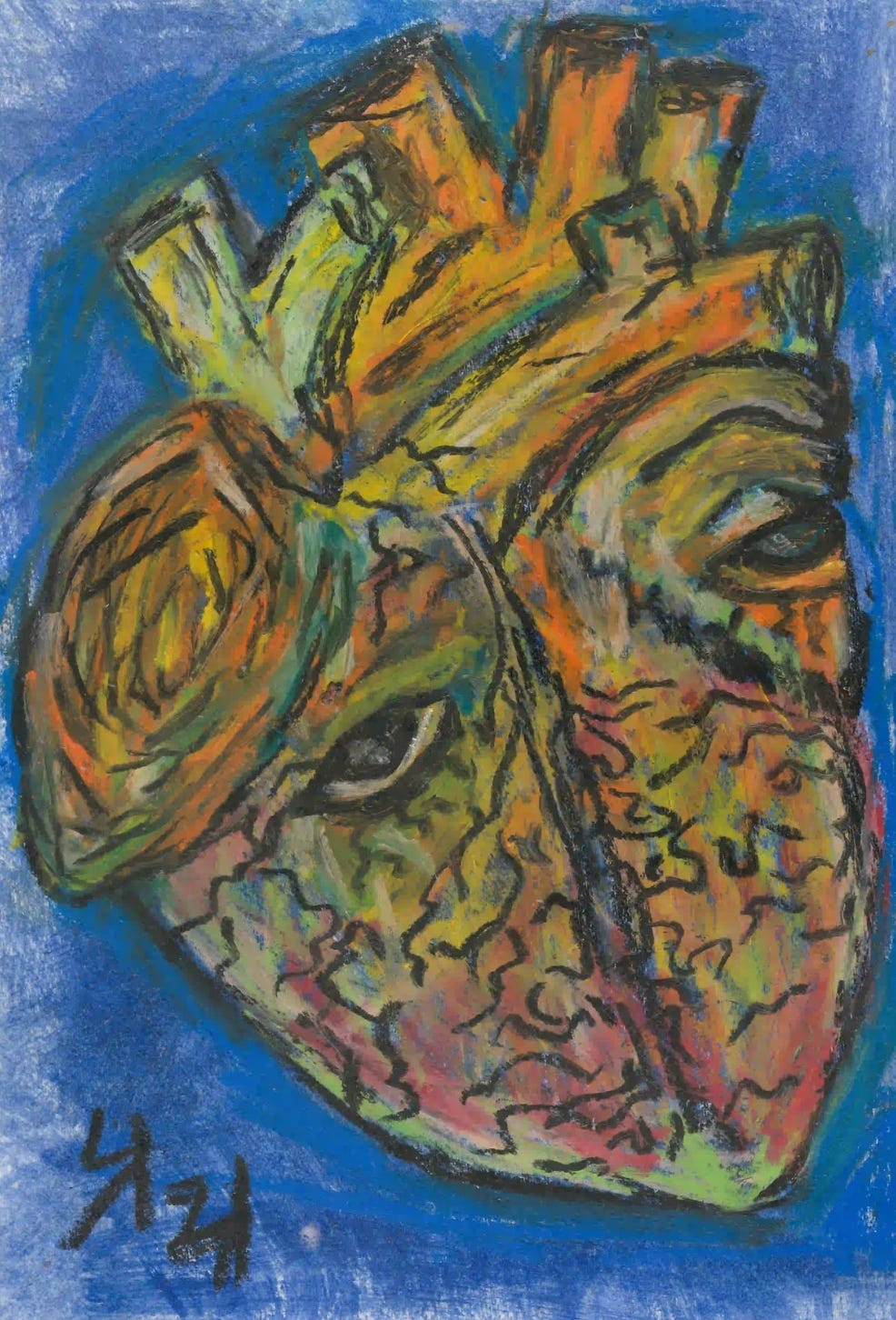
Image: Brain of a sad man, 2019, Oil pastels on paper. 5.8 x 8.3 in
If you could go back to the beginning of creating this series, what would you tell the artist you were then, knowing the journey these works would take you on?
I would not tell him anything.
I would simply observe my younger self from a distance, like an invisible force watching the work unfold. I accept the way my work has turned out, and I would not change anything or offer any insights, because I know it could disrupt the journey of finding myself. Artists make art to discover who they are, and that specific art, in turn, finds the artist. It’s like the saying that when man meets God, both exclaim to each other, “My creator!”
Everything happens in its own time.
The LMSA Take
Defeat of a Man is not for passive observers or those seeking a grand statement. This series is for the intimate collector. The modest scale and the directness of oil pastel on paper define its unique power. This is art that demands closeness, both physically and emotionally, inviting a one-on-one conversation between the viewer and the raw humanity on display.
Pratulya Chand does not offer easy answers, but rather, a profound and shared questioning. Prepare to be drawn to the tactile immediacy of works on paper and the intense intimacy of the artist’s unguarded expression. This one is for collectors who understand that true strength lies in acknowledging fragility, and who value the raw honesty required to transform private struggle into a public, and ultimately connective, act. This is an acquisition for those who seek to live with art that challenges, comforts, and tells the truth.


 Request for information